

 By Jordan Mercier
- Debris guide
- 8 min read
How Does Storm Debris Pickup Work in East Baton Rouge and Livingston Parish?
After a big storm, parish and state crews haul a huge amount of debris, but only from the curb and only when it is sorted their way. Here is what they take and what they leave.
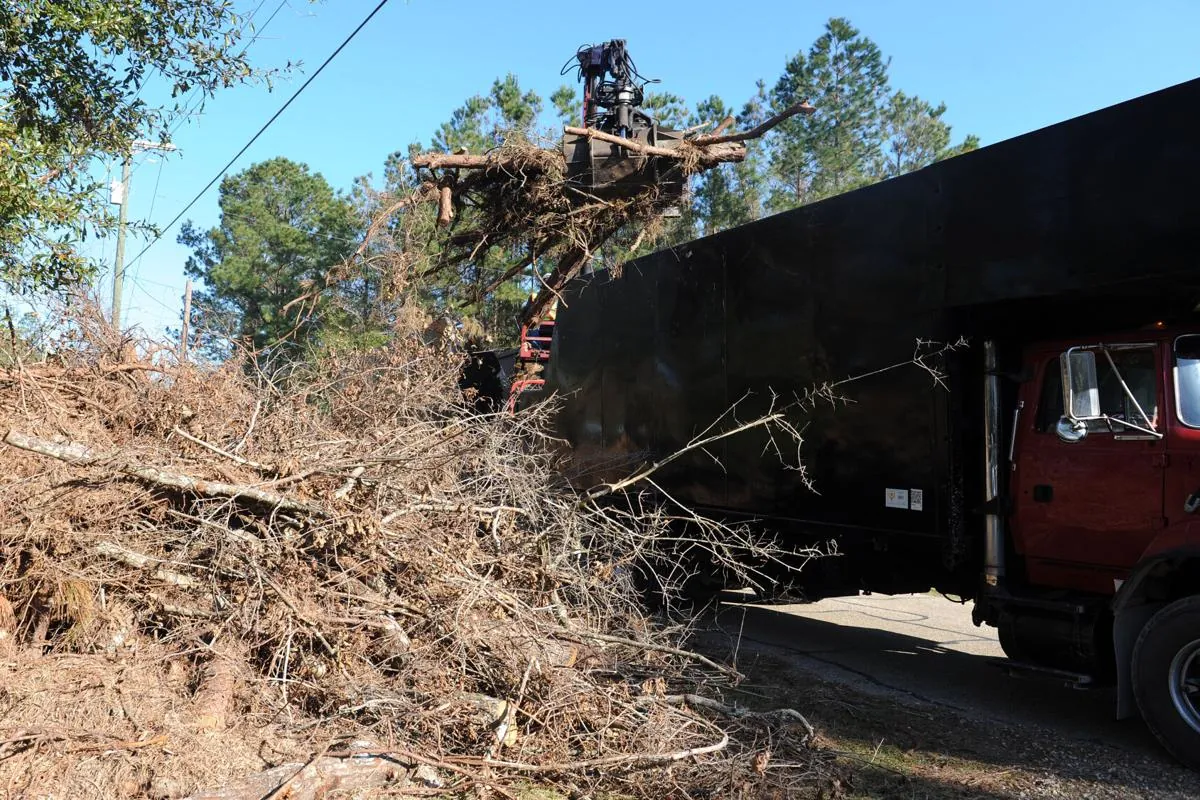
Parish storm debris crews collect from the public right-of-way only: the strip between the street and the sidewalk, ditch, or utility pole. They will not come onto private property. Piles must be sorted by type and kept clear of mailboxes, meters, hydrants, and power lines. Contractor debris, mixed piles, and anything left behind the house stay with you.
Around Baton Rouge and Denham Springs, the storm passes and the waiting starts. Limbs stack up behind the fence, a soaked couch sits in the carport, and the curb pile grows by the day. Some of it the parish will take. Some of it will still be there when the trucks are gone.
Storm pile still in the backyard? Text Jordan a few photos and your town. You’ll get a free estimate range, and we haul it from wherever it sits, not just the curb.
What Does East Baton Rouge Parish Pick Up After a Storm?
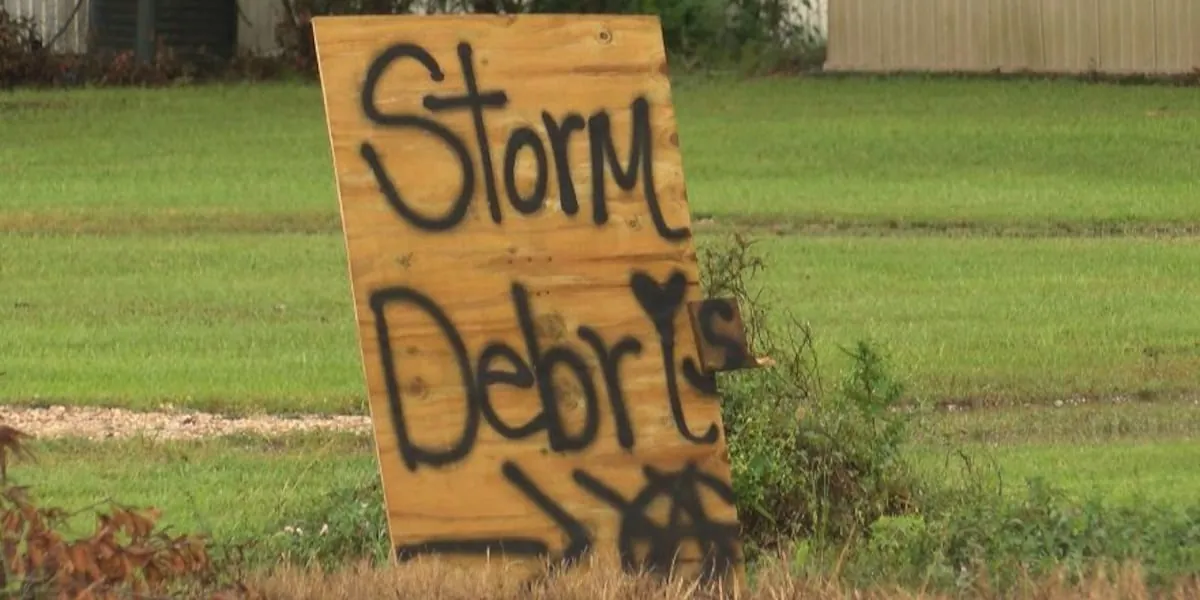
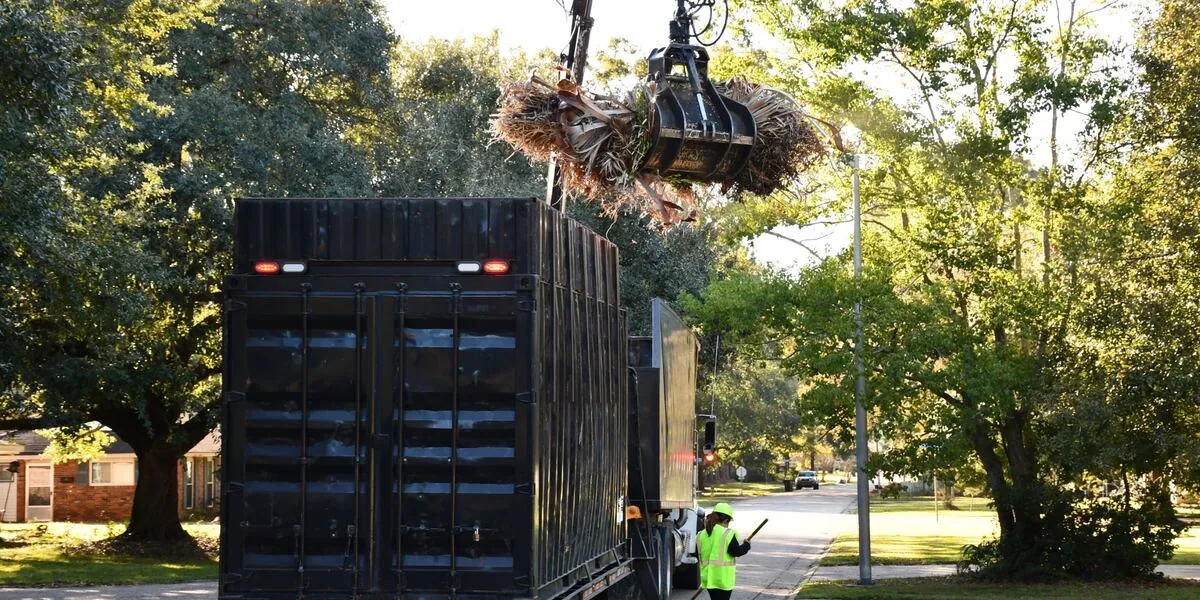
East Baton Rouge collects loose storm debris placed curbside. The City-Parish’s May 2024 storm debris alert defines the curb as the public right-of-way: the area from the street to the sidewalk, ditch, utility pole, or easement.
That same alert said only loose storm debris would be collected, and it had to stay separate from garbage and recycling. The alert covered the parish, with Baker and Zachary excluded.
Four months later, Hurricane Francine brought a fuller set of rules. According to WAFB’s September 2024 report on the City-Parish’s Francine debris plan, those rules said:
- No private property. City-Parish contractors will not enter it to collect storm debris.
- Curbside or nothing. Only debris placed curbside is eligible for collection.
- Bags go separately. Bagged debris went to the out-of-cart contractor and had to sit three feet from the loose pile.
- Watch overhead. Do not stack debris under low-hanging trees or power lines.
- Keep three feet clear of mailboxes, water meters, fire hydrants, and carts.
Baker, Central, and Zachary handled their own debris contracts for Francine. If you live in one of those cities, check with your city, not the City-Parish. Those are the rules. The next section covers how to stack a pile so it actually gets picked up.
How Should You Stack a Storm Debris Pile So It Gets Picked Up?
Crews move fast after a storm, and a pile that breaks the rules can be passed over. A few minutes of sorting at the curb saves a second trip.
Sort by type the way the Louisiana DEQ asks in its 2021 guidance on separating debris after a storm or flood. Vegetation goes in one pile, building debris like drywall and lumber in another, and appliances, electronics, and household chemicals each in their own.
Keep the pile out of the roadway and out of the ditch. DOTD told residents after Ida not to place debris in either spot.
What Storm Debris Will the Parish Leave Behind?
This is where most people get stuck. A storm cleanup produces several kinds of debris the parish trucks are not set up to take.
- Anything still on your property. A limb pile behind the shed, a soaked mattress in the garage, fencing along the back line. Crews don’t come in after it.
- Contractor and tree service debris. The City-Parish asks residents to make sure removal is in the contract. In 2024, officials also pointed to an ordinance requiring storm contractors to remove their own debris.
- Mixed piles. A pile with trash, bags, and limbs thrown together breaks the separation rule.
- Piles in the wrong spot. Debris in the roadway, the ditch, under power lines, or against a mailbox or hydrant.
- Remodeling debris dressed up as storm debris. Our debris removal guide for Baton Rouge and Denham Springs explains why East Baton Rouge curbside skips construction and demolition debris in normal times.
If your pile falls into one of those groups, it stays put until you deal with it. The good news is that most of these are simple hauls.
What About Livingston Parish and State Roads?
In Livingston Parish, who picks up storm debris depends on the road out front. After Hurricane Ida, the state stepped in on its own highways.
The Louisiana DOTD’s October 2021 notice on its final Ida debris pass, which covered Livingston Parish, set firm limits:
- State right-of-way only. State contractors could only remove debris from state roads.
- No commercial, agricultural, or undeveloped land. Debris on those properties would not be removed.
- No dark-colored bags. Dark bagged debris would not be removed.
- Keep it clear. No debris in the roadway, ditches, or corners, or on power lines, hydrants, or utility stub-outs.
- Appliances wait. Refrigerators, freezers, and engines might need separate disposal or a later pass.
Parish roads fall under the parish’s own collection. Outside a declared storm cleanup, the Livingston Parish Code has licensed collectors offer special pickup of bulky waste up to 2 cubic yards a week per home. A big storm pile can be many times that.
Behind the fence, under the carport, or too big for the curb? We load it where it sits and haul it off in one visit. Text a few photos for a free estimate range.
Why Do the Storm Debris Rules Change From Storm to Storm?
Each storm cleanup comes with its own notice. A rule you remember from the last storm may not match this one.
The clearance distance is a good example. East Baton Rouge’s May 2024 alert asked for four feet from mailboxes, meters, hydrants, and utilities. The Francine plan in September 2024 said three feet, and it added a separate contractor for bagged debris.
So read the notice for the storm in front of you. In East Baton Rouge, the City-Parish posts storm updates at brla.gov. During Francine, residents reported missed debris through 311.brla.gov or (225) 389-3090. In Livingston Parish, check the parish government’s storm updates.
When Does It Make Sense to Hire a Hauler for Storm Debris?
If the parish will take your pile, let them. It costs you nothing but the work of dragging it to the curb. A hauler makes sense when the pile falls outside what the parish collects.
That usually means one of these:
- The debris is behind the house and moving it to the curb is more than you can carry.
- The pile is mixed with ruined furniture, carpet, or household contents from a flooded room.
- You can’t wait for a sweep that may be weeks out, because the pile sits on your lawn or blocks a driveway.
- The property is a commercial or undeveloped lot, the kind state crews skipped after Ida.
We do the hauling: storm cleanup of downed branches, damaged outdoor furniture, and waterlogged household contents. Tree cutting and large stump work belong with a tree service. Once the tree is down and cut, we can load and haul what’s left.
Pricing comes from load volume, plus a fee for specialty items. Our pricing and common questions page lists those. Text a few photos for a free estimate range, and Jordan confirms the final price on site before anything gets loaded.
Storm loads are mostly limbs and soaked material, so most of it goes to proper disposal. When something dry and usable turns up, like patio chairs that made it through, it goes to a local community thrift store. You can read how we decide where usable items go, or meet Jordan and see why he started Second Life.
Storm Debris Questions From Baton Rouge and Livingston Parish Homeowners
These are the questions that come up in the week after a storm, while the piles are still growing. The answers come from the parish and state notices covered above.
Will East Baton Rouge crews come into my backyard for storm debris?
No. During the Hurricane Francine cleanup in 2024, City-Parish leaders said their contractors would not enter private property, and only debris placed curbside would be eligible. If limbs or ruined furniture are still behind the house, you have to move them to the curb yourself or hire someone to haul them.
Can my roofer or tree service leave their debris at the curb?
No. The City-Parish’s May 2024 storm alert says contractors and tree services should not place debris curbside, and residents should make sure commercial removal is part of the contract. In 2024, officials also pointed to an ordinance requiring contractors who do storm work to remove their own debris.
How far should a storm debris pile sit from my mailbox?
It depends on the storm notice. A May 2024 alert asked East Baton Rouge residents to keep debris four feet from mailboxes, water meters, fire hydrants, and utilities. The Francine notice four months later said three feet. Read the current notice for the storm you are cleaning up after.
Do state crews pick up storm debris in Livingston Parish?
Sometimes, on state roads only. After Hurricane Ida in 2021, Louisiana DOTD contractors made a final pass through Livingston Parish, but only on state right-of-way. Debris on parish roads falls under the parish’s own collection, so call the parish for a road it maintains.
Why did the crew skip my bagged leaves?
Bags are often handled separately from loose storm debris. In East Baton Rouge in 2024, bagged debris went to a different contractor and had to sit three feet from the loose pile. On state routes after Ida, DOTD said dark-colored bagged debris would not be removed at all.
How much does it cost to haul storm debris from my yard?
Our pricing is based on load volume, plus a fee for specialty items like tires, concrete, brick, and tile. Text a few photos of the pile and your town for a free estimate range. Jordan confirms the final price on site before anything is loaded, so there are no surprises on pickup day.
One text, and the storm pile is gone. We load it from wherever it sits, haul it, and sweep up in one visit. You get a free estimate range from photos first, and Jordan confirms the final price in person before loading.
Published