

 By Jordan Mercier
- Estate Cleanouts
- 11 min read
Estate Cleanout Checklist: What to Do, and in What Order
Clearing a parent’s home is a list of hard decisions. Doing them in the right order makes each one smaller.
An estate cleanout goes best in four phases. First, check with the estate’s attorney or succession representative, pull the important papers, and lock up valuables. Second, sort room by room into keep, donate, sell, and dispose. Third, hold an estate sale if it fits, then clear the rest. Fourth, walk the empty house before handing keys to the realtor.
If you’re reading this, you may be where a lot of families in Denham Springs, Zachary, and Baton Rouge find themselves. Mama’s or Daddy’s house is full, siblings live in three different towns, and a listing date or closing is coming. Weekends keep disappearing into the same rooms. This checklist puts the work in order so you can finish it kindly and completely.
The family took what they wanted. We can help with the rest. Text us a few photos of each room, and we’ll send a free estimate. Usable furniture and appliances go to local thrift stores, not the dump.
The Estate Cleanout Checklist at a Glance
Here’s the whole house cleanout checklist on one screen. Each phase gets its own section below, with the details and sources.

| Phase | What happens | Who |
|---|---|---|
| 1. Prepare | Succession questions, papers, valuables, keep list | Executor, family, attorney |
| 2. Sort | Keep, donate, sell, dispose | Family |
| 3. Clear | Estate sale, drop-offs, haul-away | Sale company, family, crew |
| 4. Hand off | Walk-through, photos, keys | Family, realtor |
Notice that the cleanout crew shows up in phase 3, not phase 1. The decisions that matter most happen before anything gets loaded.
Phase 1: Before You Clear Anything
The first phase is about protecting the estate and the family. Nothing should leave the house until the people with authority agree on what happens next.
This is general information, not legal advice. We’re a cleanout company, not lawyers, and every estate is different.
Check with the person handling the succession
In Louisiana, settling an estate is called a succession. The Louisiana Governor’s Office of Elderly Affairs booklet on probate and succession, last updated in 2020, describes it as the process that transfers property from the person who died to those who inherit, after debts are paid.
The booklet also says you should talk with a Louisiana attorney about your situation. Before you sell, donate, or haul anything, ask that attorney or the executor what’s allowed and when. Get the go-ahead in writing, even a text. It keeps siblings on the same page later.
Pull the important papers first
Papers turn up everywhere in a parent’s home: kitchen drawers, shoeboxes, the top shelf of a closet. Go through every one before any room is cleared.
The FTC’s June 2025 guide to which documents to keep and which to shred lists papers to keep for good. That includes birth certificates, Social Security cards, passports, marriage and divorce papers, military records, wills, powers of attorney, retirement and pension plans, and death certificates of family members.
For tax records, the IRS page on how long to keep records says 3 years covers most situations, with longer periods in some cases. Hand those boxes to whoever files the final return.
Protect your parent’s identity
Thieves sometimes use a person’s identity after death. As of 2026, the IRS identity theft guide for individuals suggests three steps. File the final tax return when due. Send the credit bureaus a copy of the death certificate and ask for a “deceased alert.” And keep personal details out of the obituary.
That’s also why papers with account numbers, Social Security numbers, or medical details should be shredded, not tossed in a load.
Secure valuables and make the family keep list
Before any outside crew, buyer, or volunteer walks through, gather jewelry, cash, guns, keys, and small valuables. Lock them up or take them home.
Then make a written keep list. Each family member names what they want, and you settle disagreements now, not on cleanout day. Put kept items in one marked room, or better, move them out of the house. Once phase 1 is done, the sorting can start.
Phase 2: Sort Room by Room Into Keep, Donate, Sell, and Dispose
Sorting is where most of the time and most of the feelings go. A simple system keeps it moving.

A few habits help families finish:
- Start with the smallest room. A bathroom or laundry room gives you a quick win.
- Label everything. Colored tape or sticky notes on furniture work better than memory.
- Use a maybe box. If a decision stalls, it goes in the box. Revisit it at the end.
- Let one person make final calls. Usually that’s the executor. It saves arguments.
- Take breaks. Finding a parent’s handwriting in a drawer can stop you cold. That’s normal.
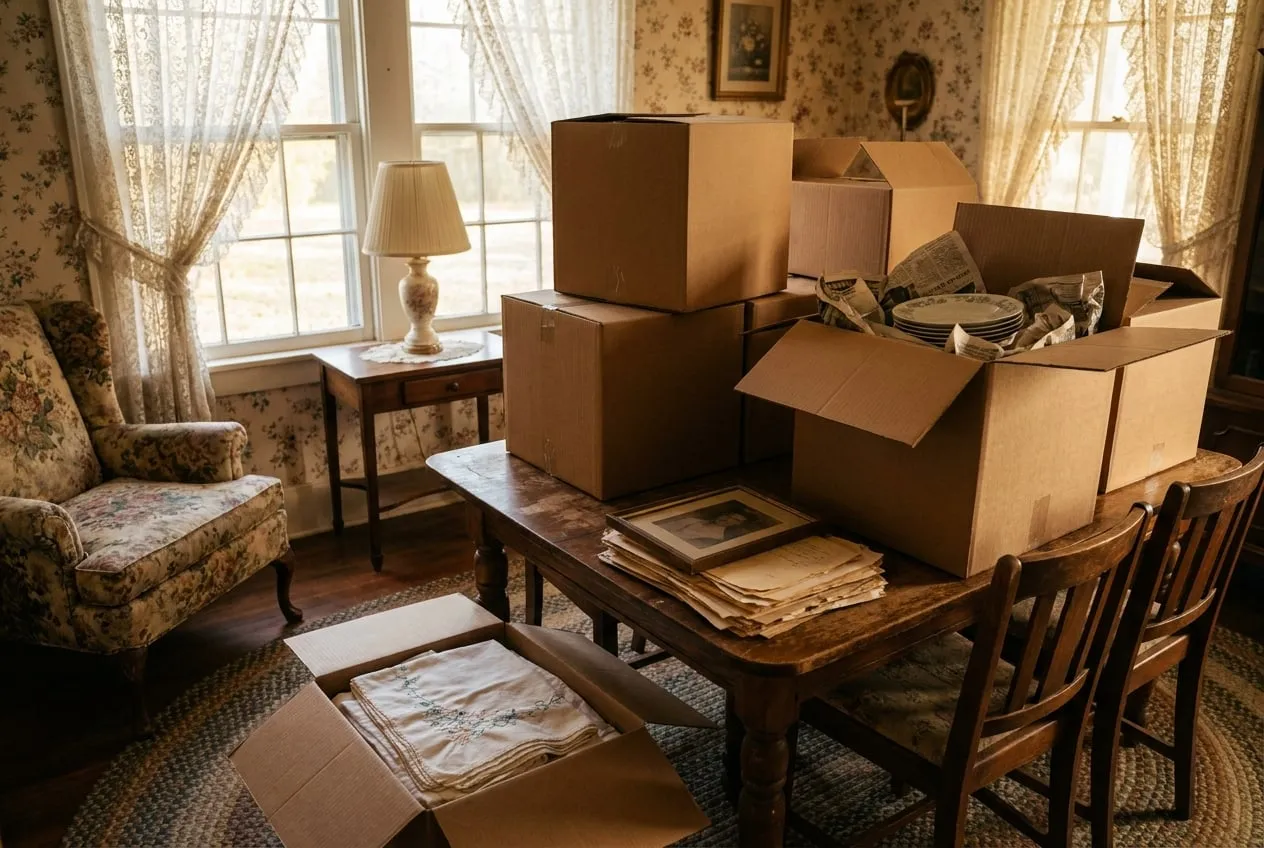
Once the piles are clear, each kind of item has its own best next step.
What to Do With Furniture, Appliances, Clothes, Papers, and Hazardous Items
Different things leave a house in different ways. Here’s where each kind tends to go.
Furniture and appliances
Usable furniture and working appliances can keep helping people. Habitat for Humanity’s Greater Baton Rouge ReStore lists furniture and appliances among the donations it accepts. Our guide to where to donate furniture in Baton Rouge covers more options.
If you want a tax deduction for donated items, condition matters. The IRS says in Publication 526 on charitable contributions that clothing and household items must be in good used condition or better to deduct. Ask the estate’s tax preparer how that applies to you.
This is the part of the work we care about most. We sort every load by hand, fix what’s easily fixable, and take usable pieces to local thrift stores. You can read how our donation process works before you call.
Clothes and linens
Clean, wearable clothes and linens can be donated. Check pockets, purses, and coat linings first. Families find cash, rings, and letters there more often than you’d think.
Papers and photos
After phase 1, what’s left is usually old mail, bills, and receipts. The FTC’s 2025 guide says to shred papers with personal or financial details. If you don’t own a shredder, it suggests looking for a local shred day. Box up photos and letters for the family, even if nobody wants to look through them yet.
Hazardous items and medicines
Paint, cleaners, oils, batteries, and pesticides need special care. The EPA’s household hazardous waste guidance warns against pouring them down the drain or on the ground and points people to local collection programs.
In East Baton Rouge Parish, the city-parish holds collection days in spring and fall. The Baton Rouge household hazardous materials page lists the fall 2026 event for Saturday, November 21, from 8 a.m. to noon at the LSU Touchdown Village parking lot. Business waste isn’t accepted. If the house is in another parish, call that parish’s solid waste office.
That same page says empty or dried-out latex paint cans can go in the trash. Cans less than half full can be dried out with kitty litter. Save fuller cans for collection day.
For old prescriptions, the FDA’s guide to disposing of unused medicines calls drug take-back programs the best option. Set these items aside before cleanout day. We don’t haul paint, chemicals, or medicines.
Big appliances like an old fridge need a little planning too. Our guide on getting rid of an old refrigerator in Baton Rouge walks through it.
Sorted the keep pile? The rest can go in one visit. We haul off furniture, appliances, and household things, fix what’s easily fixable, and pass the good pieces on to local thrift stores. Send photos for a free estimate.
Estate Sale or Cleanout: Which Comes First?
The answer depends on what’s in the house. If there’s something worth selling, the sale comes first. The cleanout clears what’s left.
An estate sale makes sense when the house holds antiques, collections, jewelry, art, good tools, or quality furniture. Most sales leave some things unsold. Those leftovers are what a cleanout crew is for.
If the contents are mostly everyday furniture, clothes, and kitchen things, many families skip the sale. They donate what’s usable and clear the rest in one step. It saves weeks.
To be clear about our role: Second Life doesn’t run estate sales, appraise items, or give legal or tax advice. We do the cleanout, sort what’s left, and donate what’s usable. So how do you book that part well?
How to Schedule the Estate Cleanout
Good scheduling saves you another month of weekends. Work backward from your closing date or listing date.
- Pick a date after the keep list is final and after any estate sale ends.
- Send photos of every room, plus the attic, garage, and shed. Our pricing and estimate FAQ explains how photo quotes work.
- Get the quote in writing. We price by load volume and the drive, and the estimate is free.
- Plan access. If you live out of town, a lockbox works. We text before we head over.
- Ask for photos. We send before-and-after photos when the job is done, so you can see the house without driving in.
If you’d like to know who’s coming into your parent’s home first, you can meet Jordan and read how Second Life works. Then it’s time to finish the house.
The Empty-House Walk-Through for Realtors
The last step is a slow walk through the empty house. It’s what keeps a realtor from finding a full attic the day before photos.
Walk it with your realtor if you can. Check:
- Every closet, cabinet, and drawer, including the ones above the fridge
- The attic, crawl space, garage rafters, and shed
- Under sinks and behind the water heater
- The yard, carport, and side of the house
- Floors swept, so the house is ready to photograph
Agree on who keeps utilities on through closing and who holds the keys. Realtors and property managers who need a house cleared on a deadline can see our cleanouts for realtors and property managers.
When to Call an Estate Cleanout Crew
You don’t have to do every phase yourself. A crew makes sense when any of these are true:
- The family has taken what it wants, and the rest is too much to move.
- You live out of town and can’t keep driving in.
- There’s a listing date or closing on the calendar.
- The house has heavy furniture, old appliances, or a packed garage.
- You want the good pieces to go somewhere useful, not the landfill.
Our house and estate cleanout services cover homes across Denham Springs and Greater Baton Rouge. You can also call or text (225) 605-8607 with questions before you’re ready to book.
Estate Cleanout Questions Baton Rouge Families Ask
These are the questions families ask most when they’re settling a parent’s home around Baton Rouge. If yours isn’t here, text us and ask.
How long does an estate cleanout take?
Most of the time goes into the family’s sorting, which can take a few weekends or a few months. The haul itself is usually the fast part. Once your keep pile is set aside, we can often clear the rest of the house in one visit, depending on its size and how full it is.
Do we have to wait for the succession to finish before clearing the house?
It depends on the estate, the will, and who has authority to act, so ask the attorney or succession representative before anything is sold, donated, or hauled off. This guide is general information, not legal advice. Many families clear the house once that person gives the go-ahead in writing.
What should we keep before the cleanout crew comes?
Keep anything named in the will, family photos and letters, keys, and the papers the FTC says to keep for good, like birth and death certificates, Social Security cards, military records, wills, and pension papers. Put all of it in one marked room or your car so nothing gets mixed into a load.
Can my parent’s furniture be donated instead of thrown away?
Yes, if it’s usable. Second Life sorts every load by hand, fixes what’s easily fixable, and takes usable furniture and working appliances to local thrift stores. After the job, we tell you where those pieces went, so you know your parent’s things are still helping a neighbor.
How much does an estate cleanout cost in Baton Rouge?
There’s no flat price, because no two houses hold the same amount. We price by load volume and the drive. Text us photos of each room and the town, and we’ll send a free estimate. The quote covers what’s in the photos, so there are no surprises on cleanout day.
Should we hold an estate sale before the cleanout?
If the house has antiques, collections, jewelry, or quality furniture, an estate sale first can bring in money for the estate. The cleanout comes after, for whatever didn’t sell. If the contents are mostly everyday furniture and household items, many families skip the sale and go straight to donation and a cleanout.
What can’t go in an estate cleanout load?
Paint, pesticides, pool chemicals, motor oil, and old medicines need their own drop-off. East Baton Rouge Parish holds household hazardous materials collection days in spring and fall, and the FDA points to drug take-back programs for medicines. For anything unusual, ask us before cleanout day, and we’ll tell you plainly.
Let your parent’s good things keep helping people. Send a few photos and we’ll text back a free estimate. We work at your pace, clear the house in one visit, and tell you where the usable pieces went.
Published